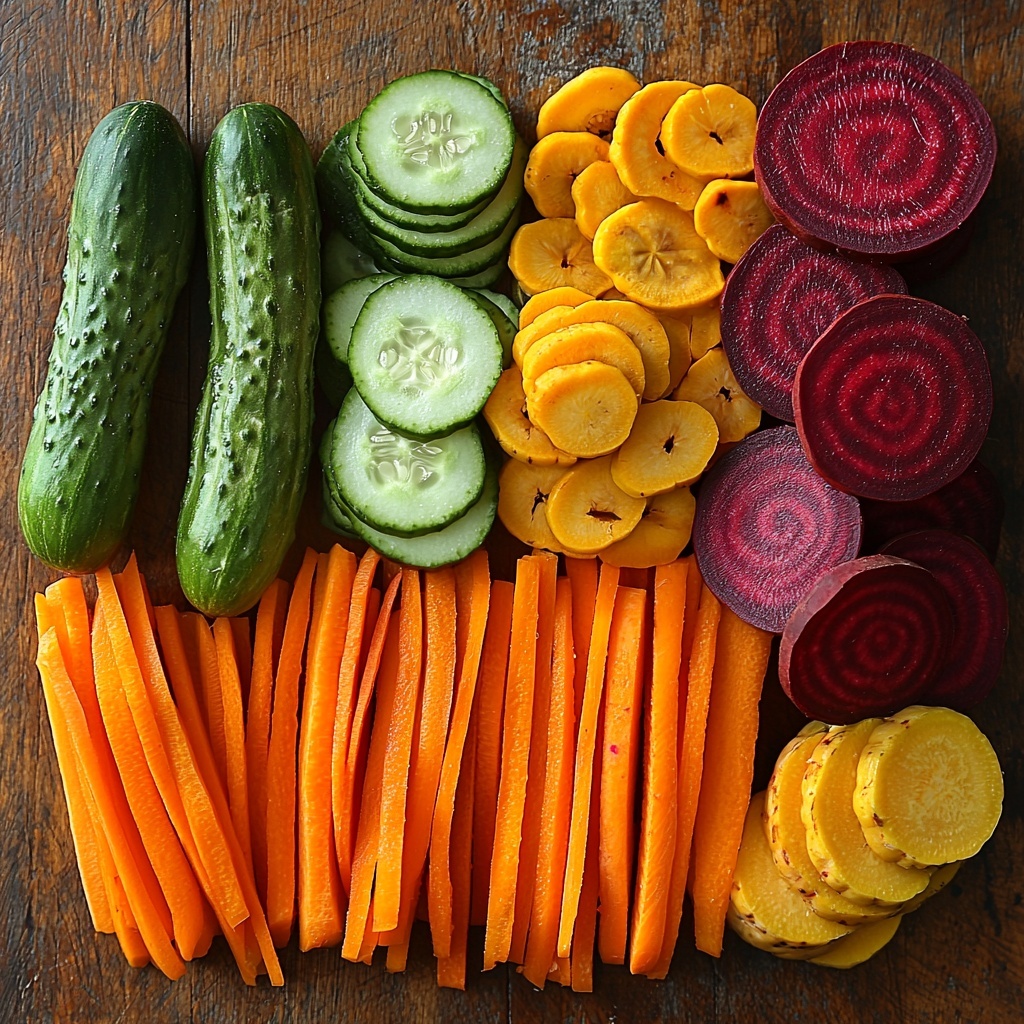
If you’ve ever admired those perfectly thin, matchstick-like strips of vegetables on your favorite salads or stir-fries and wondered how to achieve that precision at home, you’re in for a treat! This delightful guide on How to Cut Julienne Strips Recipe will walk you through the simple, satisfying art of creating crisp, elegant vegetable strips that elevate any dish. With just a single vegetable and a bit of technique, you’ll unlock a world where presentation meets texture, making your meals look as good as they taste.
Ingredients You’ll Need
Getting started with julienning is refreshingly straightforward because it relies on minimal, fresh ingredients that bring vibrant color, crunch, and a natural sweetness to your plate. Each vegetable you choose will add its unique flair and flavor, making this technique versatile and fun to experiment with.
- 1 vegetable (carrot, cucumber, beet, squash, etc.): Choose fresh and firm produce for clean, crisp strips that hold their shape beautifully.
How to Make How to Cut Julienne Strips Recipe
Step 1: Prepare Your Vegetable
Start by selecting your vegetable, such as a carrot or beet, that works perfectly for julienning. For root vegetables, gently peel off the outer skin with a vegetable peeler to reveal a smooth surface, which will help make precise cuts easier and enhance the texture of your strips.
Step 2: Trim and Square Off
Next, cut off the ends of your vegetable to create flat surfaces. Then, slice the vegetable into manageable sections about 2 to 3 inches long. Trim each section to form a rectangular block by shaving off rounded edges—this step is crucial as it ensures uniform strips and prevents wobbling while slicing.
Step 3: Slice into Thin Planks
Place your prepared block flat-side down and carefully slice lengthwise into thin, even planks, about 1/8 inch thick. Keeping steady hands and a sharp knife makes this easier. These slender planks form the foundation for those classic julienne strips we’re aiming for.
Step 4: Cut the Julienne Strips
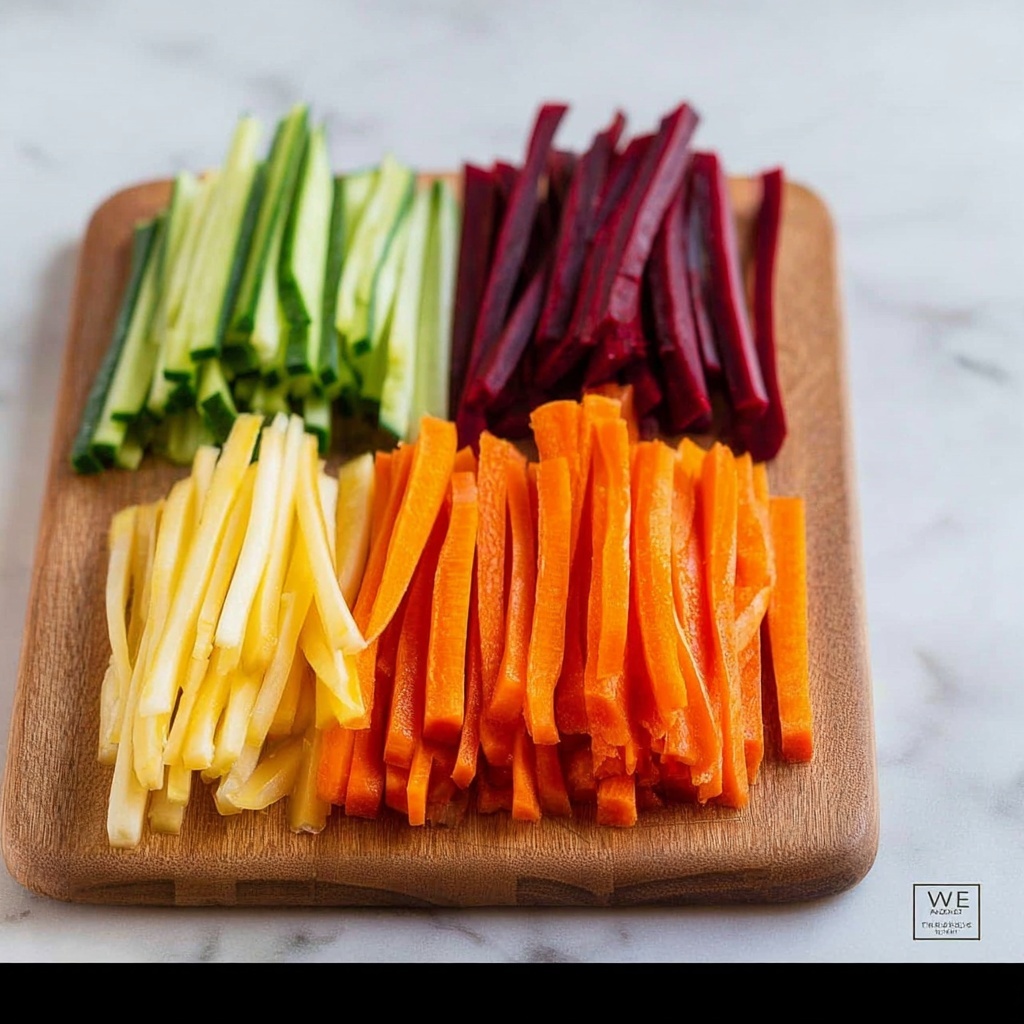
Now, stack a few of the planks at a time and slice them lengthwise again into narrow strips approximately 1/8 inch wide. This final step transforms the planks into the iconic slim, uniform matchsticks known as julienne strips, perfect for salads, garnishes, or stir-fry.
How to Serve How to Cut Julienne Strips Recipe
Garnishes
Those neat julienne strips bring a touch of elegance to any dish when sprinkled atop. Use them fresh on hearty salads, creamy soups, or even cocktails for a crunchy burst of color and texture that instantly upgrades the presentation.
Side Dishes
Julienne vegetables also shine beautifully as side dishes on their own. Lightly sauté them with a bit of olive oil, garlic, and herbs for a vibrant, healthy accompaniment to your main course that’s both colorful and satisfying.
Creative Ways to Present
Let your creativity flow by incorporating julienne strips into wraps, sushi rolls, or noodle bowls. Layer them in bento boxes for an Instagram-worthy lunch or toss them with fresh herbs and vinaigrette for a quick, refreshing slaw that bursts with crunch.
Make Ahead and Storage
Storing Leftovers
If you have leftover julienne strips, place them in an airtight container lined with a damp paper towel to maintain moisture. Store them in the refrigerator where they stay fresh and crisp for up to 2 days, ready to add crunch to any meal.
Freezing
Freezing julienne strips isn’t generally recommended because the texture can become mushy upon thawing. For the best quality, it’s best to prep them fresh, but if needed, blanch briefly before freezing to preserve color and flavor.
Reheating
When reheating, gently toss your strips in a warm pan for just a minute or two to soften slightly without losing that signature crunch. This method keeps the vegetables lively and full of taste, perfect for quick meals.
FAQs
What knife is best for cutting julienne strips?
A sharp chef’s knife with a thin blade is ideal for making clean, precise cuts when julienning. Keeping your knife well-maintained helps achieve uniform strips effortlessly.
Can I julienne soft vegetables?
Yes, but softer vegetables like zucchini or ripe cucumbers require a gentle touch to avoid bruising. You might also consider slightly thicker cuts for these to maintain their structure.
How thin should julienne strips be?
Traditional julienne strips are about 1/8 inch thick and wide, resembling matchsticks. This size offers a great balance of crispness and visual appeal.
Is peeling always necessary before julienning?
Not always. Peeling depends on the vegetable and personal preference—carrots and beets are commonly peeled for smoothness, while cucumbers or zucchini can be left unpeeled for added color and nutrients.
What dishes benefit most from julienne vegetables?
Julienne vegetables are fantastic in fresh salads, stir-fries, spring rolls, garnishes, and even veggie-packed sandwiches. Their uniform size ensures quick, even cooking and a pleasing bite every time.
Final Thoughts
Once you master How to Cut Julienne Strips Recipe, you’ll find yourself reaching for this technique again and again to bring elegance and texture to your meals. It’s a simple skill that transforms ordinary vegetables into stunning, restaurant-quality accompaniments. So grab your favorite veggie and get slicing—your dishes, and guests, will thank you!
Print
How to Cut Julienne Strips Recipe
- Prep Time: 2 minutes
- Cook Time: N/A
- Total Time: 2 minutes
- Yield: 1 serving
- Category: Knife Skills
- Method: No-Cook
- Cuisine: Universal
Description
Learn how to cut vegetables into precise julienne strips, a classic knife technique perfect for creating thin, matchstick-sized pieces of veggies like carrots, cucumber, beets, or squash. This technique enhances presentation and cooking consistency for salads, stir-fries, and garnishes.
Ingredients
Ingredients
- 1 vegetable (carrot, cucumber, beet, squash, etc.)
Instructions
- Peel the vegetable: If julienning a carrot or beet, first peel the outer layer using a vegetable peeler to remove the tough skin and ensure smooth slices.
- Cut into sections: Slice the peeled vegetable into manageable sections about 2 to 3 inches long, depending on the size of the vegetable and desired length of your julienne strips.
- Slice into thin planks: Carefully slice each section lengthwise into thin, even planks about 1/8 inch thick using a sharp knife. Maintain steady, controlled cuts for uniformity.
- Stack and slice into strips: Stack a few planks at a time and cut lengthwise again into thin strips around 1/8 inch wide. These strips are your julienne pieces, ideal for an elegant presentation and even cooking.
Notes
- Use a sharp knife to ensure clean cuts and avoid crushing the vegetable.
- For firmer vegetables like carrots and beets, peeling before cutting improves texture and appearance.
- Practice consistent sizing to ensure even cooking times if using the strips in cooked dishes.
- Julienne cuts typically measure about 1/8 inch by 1/8 inch by 2 to 3 inches in length.